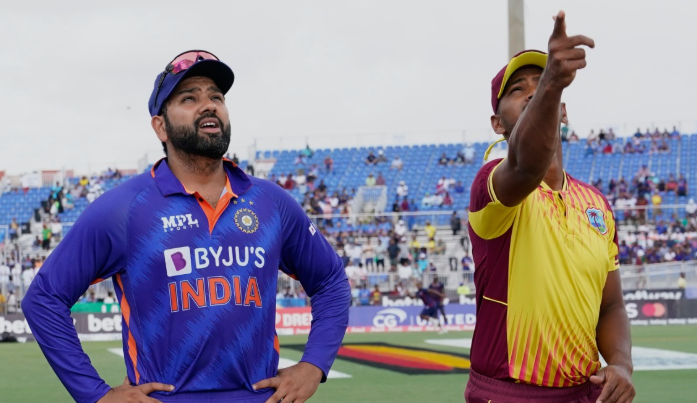
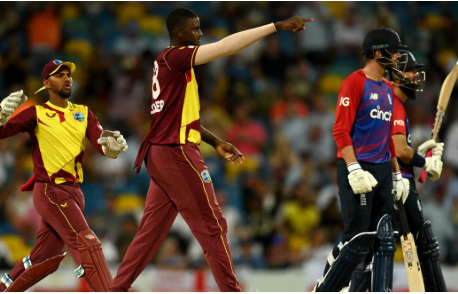
The cricket rivalry between the West Indies Cricket Team and the India National Cricket Team is one of the most fascinating journeys in international cricket history. It began with complete dominance from the Caribbean giants, who once ruled world cricket with fearsome fast bowling and fearless batting. India, on the other hand, entered the contest as an evolving side struggling to adapt to pace and bounce. Over decades, this rivalry transformed into a balanced and highly competitive battle across Tests, ODIs, and T20Is. From legendary performances to shifting eras of dominance, every phase of this matchup tells a unique story of growth, resilience, and changing cricketing power dynamics between two proud cricket nations.
Overall Head-To-Head Record
Format
Total Matches Played
India Wins
West Indies Wins
Tied / Drawn / No Result
Test
102
25
30
47
ODI
143
74
63
6
T20I
31
20
10
1
Total
276
119
103
54
ODI Stats and Records
Statistical Category
Team or Record Value
Details
Most Wins
India (74 Wins)
Out of 143 total games played
Highest Team Score
India: 418/5
Scored in Indore (2011)
Lowest Team Score
West Indies: 104 / India: 100
WI in Barbados (2023) / IND in Ahmedabad (1993)
Highest Individual Score
Virender Sehwag (India) 219
Achieved during his double century in 2011
Best Bowling Figures
Anil Kumble (India) 6/12
Caught the Windies bats in Kolkata (1993)
Most Runs
Virat Kohli (India)
Leading run scorer in bilateral ODI history
Most Wickets
Courtney Walsh (West Indies) 44 scalps
Leading bowler over 38 head to head matches
T20I Stats and Records
Statistical Category
Team or Record Value
Details
Most Wins
India (20 Wins)
Out of 31 total games played
Highest Team Score
West Indies: 245/6
Achieved in Lauderhill, USA (2016)
Lowest Team Score
West Indies: 138
Recorded in St Kitts (2022)
Highest Match Chase
India: 207/3
Successfully chased down in Hyderabad (2019)
T20 World Cup Head to Head
West Indies (3 Wins)
India has 1 win across 4 T20 World Cup games
Team Match Stats
Match Performance Indicator
India National Cricket Team
West Indies Cricket Team
Average Runs Per Test Innings
333.38 runs
243.02 runs
Average Runs Per ODI Innings
246.01 runs
221.82 runs
Average Runs Per T20I Innings
166.68 runs
156.42 runs
Highest Total Chased (ODI)
324 runs
309 runs
Lowest Total Defended (ODI)
162 runs
187 runs
Lowest Total Defended (T20I)
159 runs
169 runs
Origins of a Cricketing Rivalry
The rivalry between West Indies and India began in the early years after India’s entry into Test cricket. West Indies were already a powerful force with fast bowlers dominating world cricket, while India were still building their identity. Early tours exposed India’s technical weaknesses against pace and bounce, especially on Caribbean pitches. Despite struggles, these matches laid the foundation of respect between the two sides. West Indies’ aggressive bowling and confident batting style created a benchmark India aimed to reach. Over time, these encounters shaped India’s long term evolution into a competitive Test nation. Fans from both regions began viewing this matchup as a clash of style, temperament, and cricketing culture rather than just results.
Season
Matches
Winning Team
Key Performance
Impact
1948-50
5 Tests
West Indies
Fast bowling dominance
India exposed to pace attack
1952-53
5 Tests
West Indies
Consistent batting partnerships
India learning phase
1958-60
5 Tests
West Indies
All-round superiority
Gap in experience highlighted
1961-62
5 Tests
West Indies
Spin resistance shown
India gains tactical lessons
Early Test Battles That Defined the Tone
The early Test battles between West Indies and India set a clear tone for the rivalry. West Indies pacers consistently troubled Indian batters with pace, swing, and bounce, making scoring difficult. Indian batters often struggled to survive long spells, especially away from home. However, these matches were not entirely one-sided, as India occasionally produced resilient batting performances that frustrated the West Indies attack. These small moments of resistance slowly built India’s confidence. By the late 1970s, India began to understand how to handle hostile conditions better. Still, West Indies maintained dominance through superior fast bowling depth and aggressive field settings, making them a feared opponent in world cricket.
Season
Matches
Winning Team
Key Performance
Impact
1974
5 Tests
West Indies
Pace attack dominance
India collapsed under pressure
1976
5 Tests
West Indies
Batting depth strength
One-sided series result
1979
4 Tests
West Indies
Viv Richards impact
India competitive moments
1983
6 Tests
West Indies
Balanced all-round play
India learning resilience
Golden Era of West Indies Dominance
The 1980s are widely seen as the golden era of West Indies cricket, and India found it extremely difficult to compete during this period. The Caribbean side had one of the most feared pace attacks in history, making survival a major challenge for any batting lineup. India’s batting legends like Sunil Gavaskar showed exceptional discipline, but team totals often remained low due to relentless pressure. West Indies also dominated ODIs with aggressive batting led by icons like Viv Richards. However, this era was crucial for India’s long term development, as it forced the team to strengthen technique and mental toughness. Even though results heavily favored West Indies, the experience shaped India’s future cricketing foundation.
Season
Matches
Winning Team
Key Performance
Impact
1982
5 Tests
West Indies
Fast bowling unit dominance
India struggle continues
1983
6 ODIs
West Indies
Richards explosive batting
India exposed in limited overs
1985
5 Tests
West Indies
Consistent series wins
India rebuilding phase
1987
4 ODIs
West Indies
Power hitting control
India learns ODI tactics
Turning Point in the 1990s
The 1990s marked a turning point in the West Indies vs India rivalry. West Indies began facing internal transitions as legendary players started retiring, while India entered a golden phase of batting talent. Sachin Tendulkar emerged as a key figure who could challenge even the strongest bowling attacks in the world. India also improved significantly in ODIs with a more aggressive approach. West Indies still had match-winners, but consistency declined compared to their dominant 1980s phase. This decade saw more balanced contests, with India winning important matches both at home and occasionally overseas. The psychological gap between the teams started shrinking, creating a more competitive rivalry.
Season
Matches
Winning Team
Key Performance
Impact
1992
5 ODIs
India
Tendulkar rising form
Shift in batting confidence
1994
4 Tests
Draw/India edge
Balanced performances
West Indies decline visible
1996
6 ODIs
India
Strong chase success
ODI strategy evolution
1998
5 Tests
India
Home dominance
New competitive balance
Modern Era and T20 Transformation
In the modern era, especially after the introduction of T20 cricket, the rivalry between West Indies and India became more dynamic and unpredictable. India developed a structured batting lineup supported by strong spin bowling, while West Indies became famous for explosive T20 hitters like Chris Gayle and Kieron Pollard. Matches often turned into high scoring thrillers decided in the final overs. India maintained better consistency across formats, but West Indies retained the ability to produce match winning performances on any given day. The influence of franchise cricket like the IPL also blended the playing styles of both teams, making the rivalry more interconnected and globally followed than ever before.
Season
Matches
Winning Team
Key Performance
Impact
2010
5 ODIs
India
Consistent batting lineup
ODI dominance begins
2014
4 T20Is
West Indies
Gayle power hitting
T20 impact strength
2016
5 ODIs
India
Kohli consistency
Chase mastery shown
2023
5 T20Is
India
Balanced team performance
Modern era control
Key Players and Defining Contributions
Across decades, individual brilliance has played a major role in shaping the West Indies vs India rivalry. West Indies produced legends like Brian Lara and Chris Gayle, who could change matches within a few overs or long innings depending on format. India responded with icons like Sachin Tendulkar, Virat Kohli, and Rohit Sharma, who brought consistency and adaptability across conditions. Bowling battles were equally intense, with West Indies pacers challenging Indian batters and Indian spinners restricting Caribbean aggression. These individual matchups often decided series outcomes and created unforgettable moments for fans. The rivalry is not just about team performance but also about legendary players defining eras.
Season
Matches
Winning Team
Key Performance
Impact
2002
5 Tests
India
Tendulkar brilliance
Batting dominance
2006
4 ODIs
West Indies
Gayle explosive innings
ODI momentum shift
2011
5 ODIs
India
Kohli consistency
Chase reliability
2019
4 T20Is
India
Balanced attack
Modern control established
Conclusion
The West Indies vs India cricket rivalry reflects the evolution of modern international cricket itself. What began as a one-sided contest gradually turned into a competitive and unpredictable battle shaped by new generations of players. West Indies showcased their golden era dominance, while India grew into a consistent global powerhouse across all formats. Legendary performances from both sides created unforgettable moments that still define cricket discussions today. In the modern era, India holds more control statistically, but West Indies remain dangerous with their explosive talent. This rivalry continues to represent passion, history, and the ever-changing balance of world cricket power.