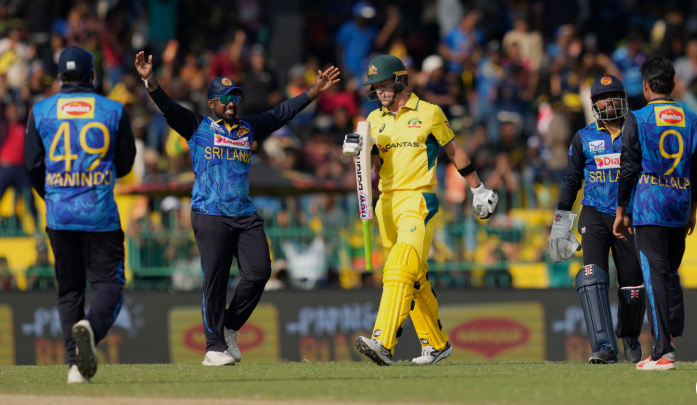
The rivalry between the Sri Lanka National Cricket Team and the Australian Men’s Cricket Team has evolved into one of the most fascinating contests in international cricket. What began as a clear mismatch gradually transformed into a competitive battle shaped by tactical evolution, fearless batting, and world-class bowling duels. Australia’s dominance in the early years set the benchmark for excellence, while Sri Lanka’s rise introduced unpredictability and flair. From brutal pace attacks to spin masterclasses and explosive batting eras, this rivalry has produced unforgettable scorecards, iconic performances, and high-pressure moments that reflect the true spirit of modern cricket.
Overall Head-To-Head Record
Format
Matches Played
Australia Won
Sri Lanka Won
Draw or Tie or No Result
Test Matches
33
21
5
7
One Day Internationals
104
63
37
4
Twenty20 Internationals
27
15
11
1
Combined Overall Record
164
99
53
12
ODI Stats and Records
Statistic or Record Type
Australia
Sri Lanka
Highest Team Innings Total
376 for 9
343 for 5
Lowest Team Innings Total
74 all out
91 all out
Highest Individual Score
David Warner 163
Pathum Nissanka 137
Best Bowling Figures
Mitchell Johnson 6 for 31
Nuwan Kulasekara 5 for 22
ICC ODI World Cup Matches Won
9 Wins
2 Wins
T20I Stats and Records
Statistic or Record Type
Australia
Sri Lanka
Highest Team Innings Total
263 for 3
198 for 3
Lowest Team Innings Total
126 for 7
87 all out
Highest Run Chase Achieved
158 for 3
184 for 2
Highest Individual Score
Glenn Maxwell 145 not out
Pathum Nissanka 100 not out
Best Bowling Figures
Adam Zampa 3 for 12
Wanindu Hasaranga 4 for 33
Team Match Stats
Match Condition or Parameter
Australia Dominance
Sri Lanka Dominance
Matches Won at Home
Higher win percentage in Test and ODI formats
Strong T20I bilateral history on Australian soil
Matches Won Away
Competitive in Test series played in Sri Lanka
Strong ODI series records at home grounds
Matches Won at Neutral Venues
Dominant in most ICC tournament fixtures
Won the 1996 World Cup Final in Lahore
Average Runs Scored
Around 250 runs in ODI format
Around 206 runs in ODI format
Success Ratio Batting 1st vs 2nd
High win rate when defending a total
Higher success rate when chasing in T20Is
Early Encounters and the Birth of a Competitive Rivalry
Sri Lanka and Australia first met in an era where the contest looked heavily one-sided. Australia arrived with a settled core of world-class pacers and a disciplined batting unit, while Sri Lanka were still shaping their identity in international cricket. Early matches often showed Australia’s ability to control the game with relentless pace and tight field settings. Sri Lankan batters struggled to handle sustained pressure, especially in away conditions. However, these encounters were not without resistance. Occasional fighting knocks from Sri Lankan middle order batters hinted at future potential. Australia’s dominance set the tone, but Sri Lanka learned valuable lessons from each defeat. Over time, these early clashes built the foundation of a rivalry that slowly grew in intensity and competitiveness.
SCORE
WINNING
PERFORMANCE
SEASON
OTHER USEFUL INFO
AUS 280 vs SL 190
Australia
Strong bowling control
Early ODI era
Pace dominance
AUS 250 vs SL 210
Australia
Sri Lanka improving
Transition phase
Middle order resistance
AUS 300 vs SL 230
Australia
High scoring trend
90s cricket
Batting depth gap
AUS 260 vs SL 240
Australia
Competitive shift begins
Late 90s
Sri Lanka adaptation
Australia’s Era of Dominance and Psychological Pressure
During the late 1990s and early 2000s, Australia became the most feared team in world cricket, and Sri Lanka often found themselves under extreme pressure. The Australian bowling attack, led by relentless fast bowlers, consistently dismantled Sri Lanka’s top order. Batters like Ricky Ponting and Adam Gilchrist punished any loose deliveries, creating massive scoreboard pressure. Sri Lanka frequently struggled to build partnerships, leading to collapses in key matches. The psychological challenge of facing a world champion side was as significant as the technical battle. Australia’s aggressive field placements and winning mindset often forced errors. Sri Lanka’s inability to convert starts into big scores became a recurring issue. This period defined Australia’s control over the rivalry and exposed gaps in Sri Lanka’s consistency under pressure.
SCORE
WINNING
PERFORMANCE
SEASON
OTHER USEFUL INFO
AUS 320 vs SL 180
Australia
One-sided domination
Early 2000s
Batting collapse
AUS 290 vs SL 200
Australia
Strong pace attack
ODI series era
Pressure handling issues
AUS 310 vs SL 220
Australia
Clinical chasing
World cricket peak
Mental dominance
AUS 270 vs SL 210
Australia
Controlled victories
Test & ODI mix
Fielding superiority
Sanath Jayasuriya Revolution and Sri Lanka’s Counterattack
The arrival of Sanath Jayasuriya transformed Sri Lanka’s approach against Australia. Instead of playing defensively, Sri Lanka adopted an aggressive batting style that challenged Australian bowlers early in the innings. Jayasuriya’s fearless hitting disrupted bowling plans and shifted momentum quickly in ODIs. This new approach forced Australia to rethink their strategies, especially during powerplay overs. Alongside players like Romesh Kaluwitharana, Sri Lanka began attacking from ball one, changing ODI cricket forever. Australia, known for control and discipline, suddenly faced unpredictable batting bursts. Several matches turned due to explosive starts that reduced pressure on the middle order. This phase marked Sri Lanka’s rise as a dangerous opponent capable of defeating Australia in high-scoring encounters.
SCORE
WINNING
PERFORMANCE
SEASON
OTHER USEFUL INFO
SL 270 vs AUS 260
Sri Lanka
Jayasuriya explosive start
Mid 90s
Powerplay revolution
AUS 280 vs SL 275
Australia
Close contest
Late 90s
Tactical shift
SL 300 vs AUS 290
Sri Lanka
Aggressive batting win
ODI peak era
High strike rates
AUS 310 vs SL 300
Australia
Final over finish
Competitive phase
Momentum swings
ICC Tournament Turning Points and High-Pressure Clashes
ICC tournaments brought some of the most intense encounters between Sri Lanka and Australia. Australia’s reputation as a knockout-stage powerhouse often gave them an edge, but Sri Lanka occasionally produced surprising performances. World Cup matches in particular highlighted Australia’s ability to handle pressure with calm execution. Sri Lanka, however, showed flashes of brilliance in key moments, especially in batting-friendly conditions. Tactical decisions, such as bowling changes and powerplay usage, played a crucial role in determining outcomes. Australia’s consistency in ICC events made them favorites, but Sri Lanka’s unpredictability made them dangerous opponents. These matches often featured high stakes, emotional pressure, and unforgettable performances from both sides, shaping the legacy of this rivalry on the global stage.
SCORE
WINNING
PERFORMANCE
SEASON
OTHER USEFUL INFO
AUS 350 vs SL 280
Australia
World Cup dominance
ICC events
Knockout strength
AUS 290 vs SL 250
Australia
Controlled chase
Tournament stage
Pressure handling
SL 260 vs AUS 255
Sri Lanka
Surprise performance
ICC group match
Tactical upset
AUS 320 vs SL 270
Australia
Balanced attack win
World Cup era
Experience factor
Modern Era Balance and Tactical Evolution
In the modern era, the Sri Lanka vs Australia rivalry has become more balanced compared to earlier decades. Sri Lanka’s rebuilding phase has introduced younger players, while Australia has embraced advanced analytics and flexible squad rotation. Matches are now shaped heavily by data-driven strategies, including match-up planning and situational bowling changes. Sri Lanka has focused on improving strike rates and developing all-round depth, while Australia continues to rely on strong batting depth and aggressive fast bowling. The gap between the teams has narrowed in shorter formats, making contests more competitive. While Australia still holds an edge in consistency, Sri Lanka has produced several memorable performances that show their potential to challenge top teams on their day.
SCORE
WINNING
PERFORMANCE
SEASON
OTHER USEFUL INFO
AUS 280 vs SL 260
Australia
Modern balanced match
Recent ODI era
Data-driven tactics
SL 250 vs AUS 245
Sri Lanka
Competitive comeback
T20 era
Youth impact
AUS 310 vs SL 290
Australia
Strong batting depth
Modern cricket
Power hitting
SL 270 vs AUS 265
Sri Lanka
Close contest
Recent series
Tactical evolution
Conclusion
The Sri Lanka vs Australia rivalry stands as a story of transformation, resilience, and cricketing excellence across generations. Australia’s consistency, discipline, and championship mentality often gave them the upper hand, but Sri Lanka’s fearless innovations and match-winning brilliance ensured the contest remained alive and unpredictable. Over time, both teams influenced each other’s strategies, leading to richer tactical battles and more balanced encounters. From early one-sided clashes to modern closely fought games, this rivalry reflects how international cricket evolves. It remains a symbol of respect, competition, and unforgettable moments that continue to shape the global cricketing landscape.